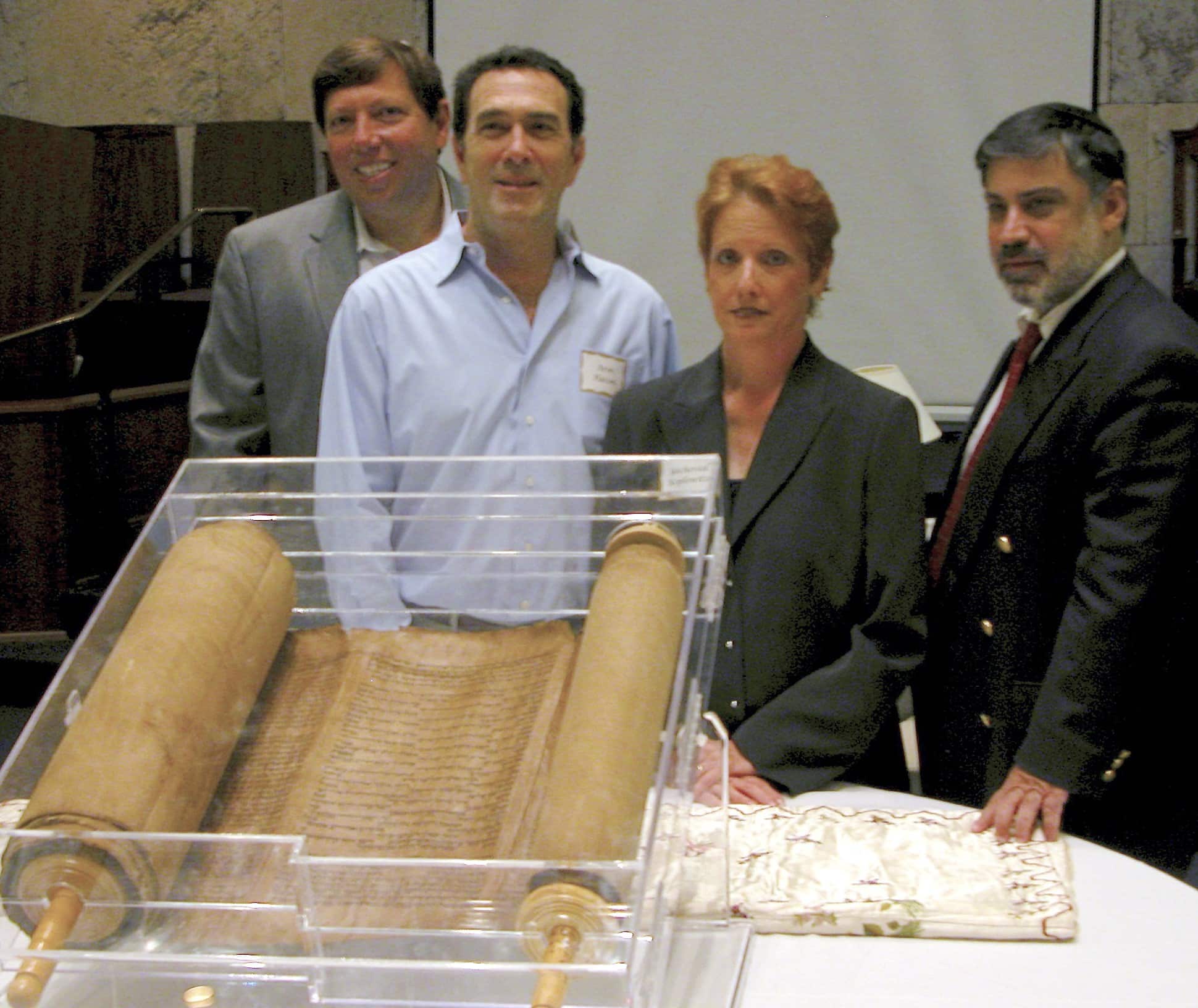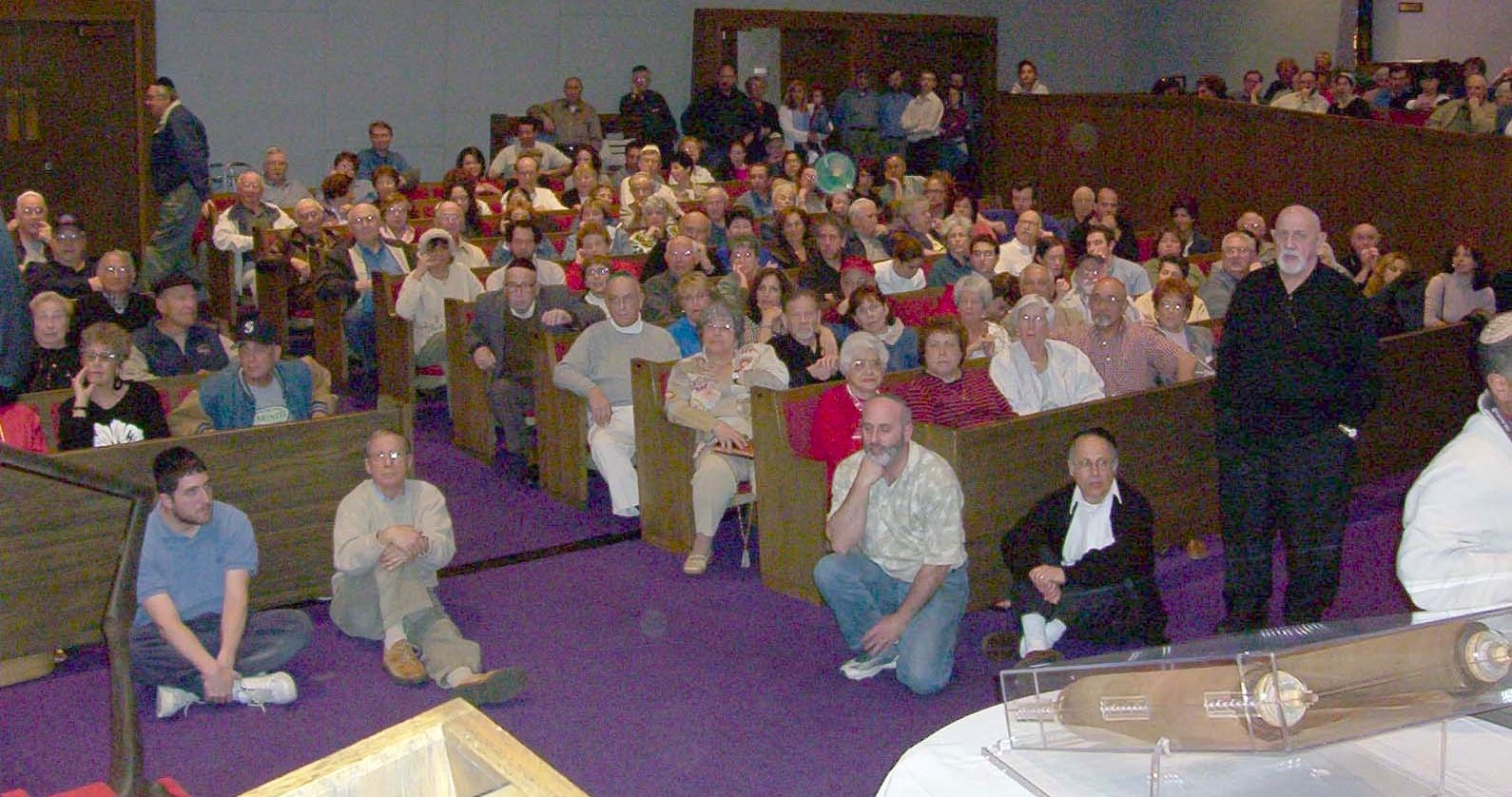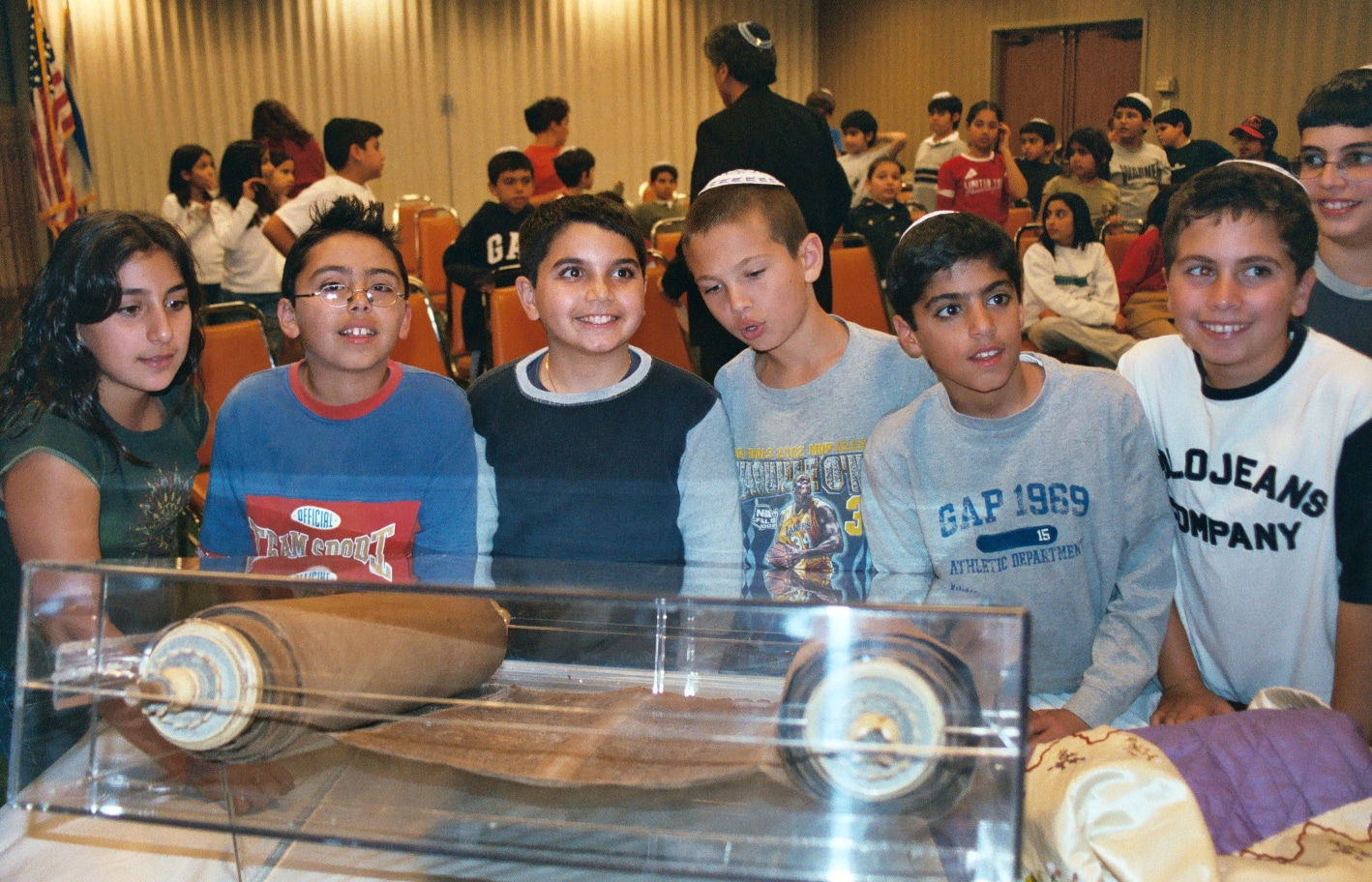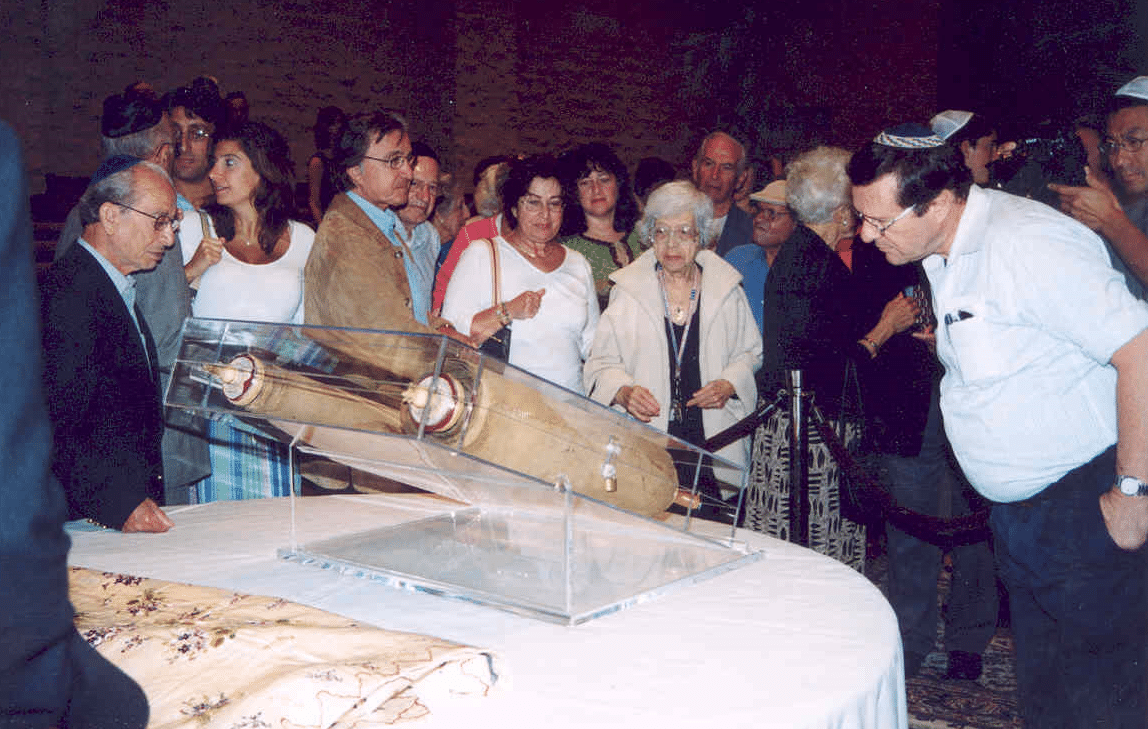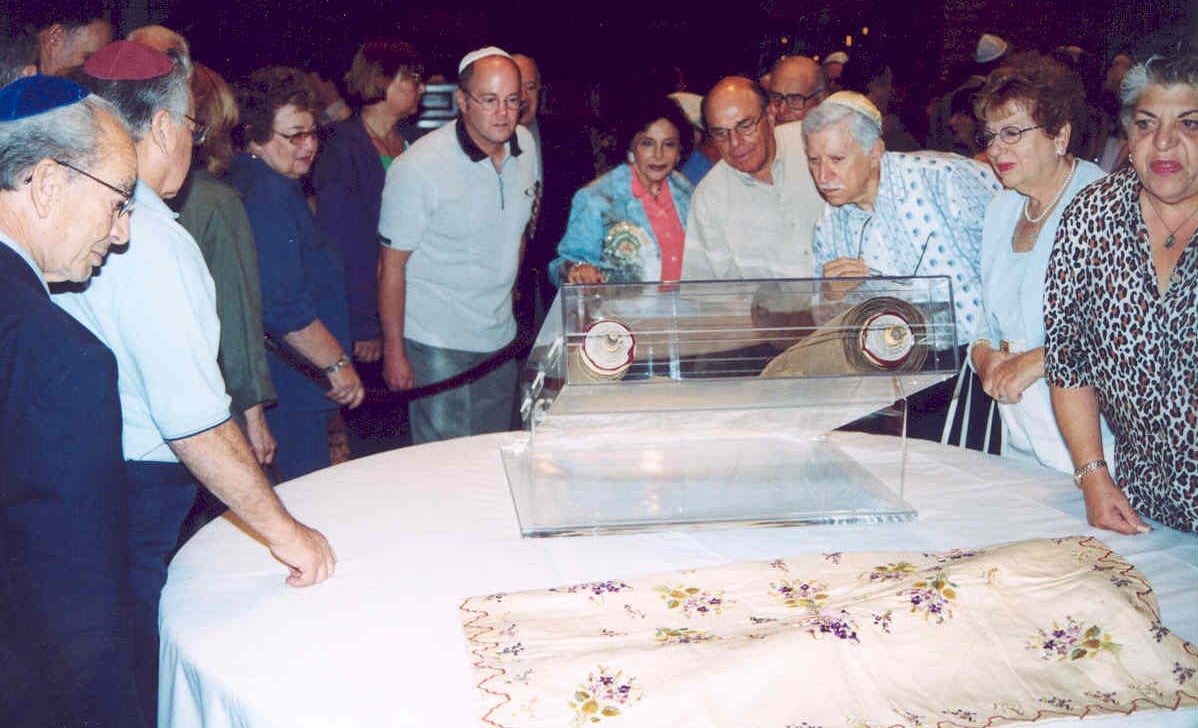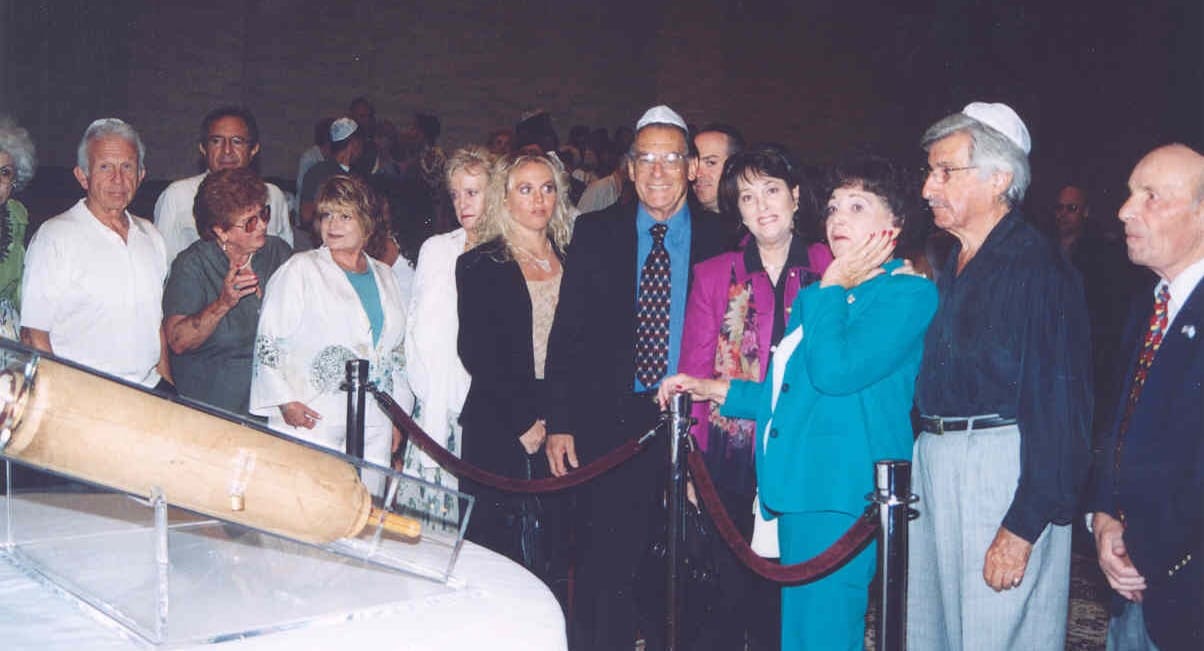
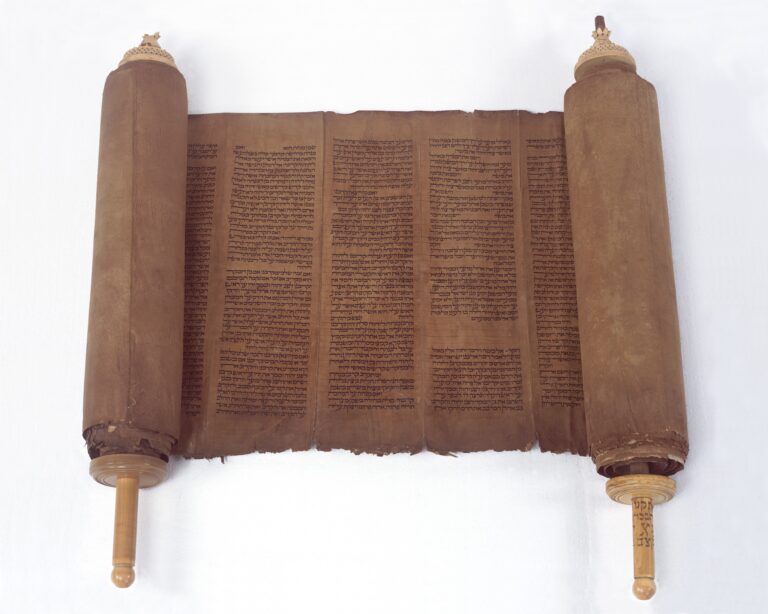
 It was speculated that its geographic origin was from Spain from before the Spanish Inquisition. Therefore, during 2003 and 2004, a study was conducted by the Rhodes Jewish Historical Foundation focusing on the peculiarities of its ancient Judaic religious writing styles.
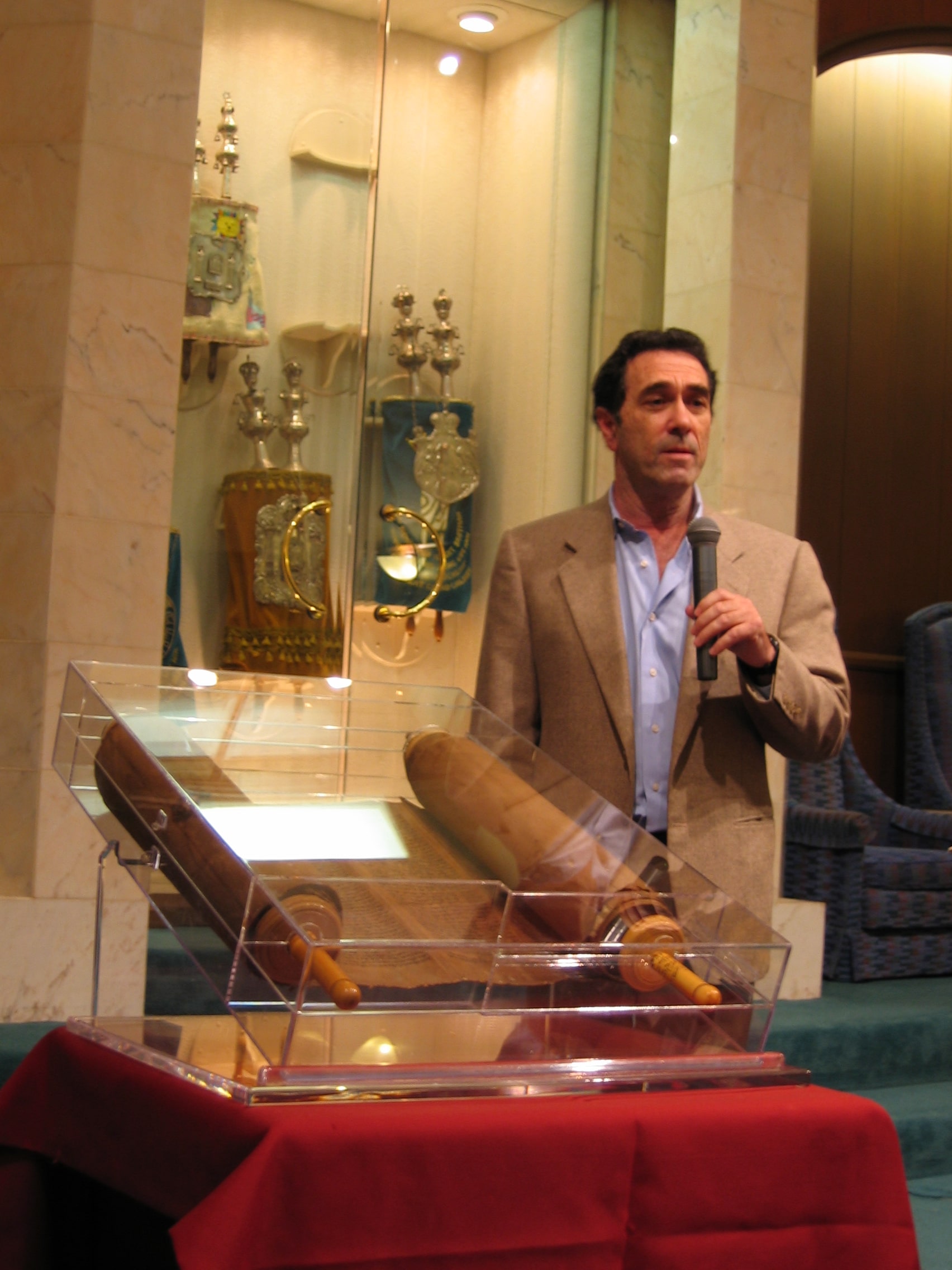
Featured in the Rhodesli Jewish Calendar (September 2010), this incredible Torah was viewed and analyzed by several rabbis and sofers (scribes of religious writings). Based upon several factors, it was concluded that this Torah was from the Sephardic Jews at the time of Maimonides.
An investigative study conducted under the aegis of the Rhodes Jewish Historical Foundation has concluded that the Sefer Torah from the Island of Rhodes was originally from and used by the Sephardic Jews of the Iberian Peninsula.
Therefore, we can imagine that this Torah was likely brought from the Iberian Peninsula to the Island of Rhodes by the Sephardic Jewish refugees when they fled Spain and Portugal.
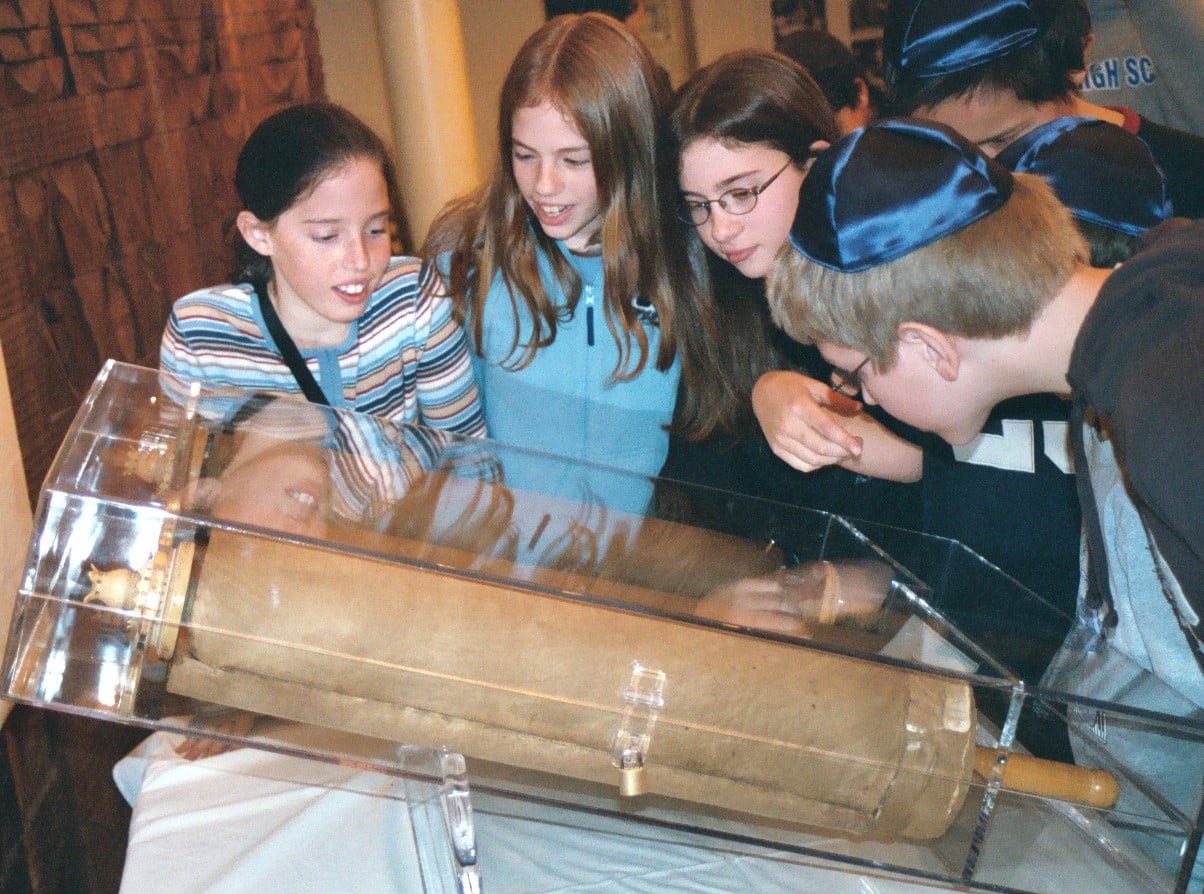
Since 2019, the Chalom Temple has loaned the Sefer Torah of Rhodes to the Holocaust Museum of Buenos Aires. According to Cecilia Martinez of La Nacion, “to facilitate its exhibition to the public while complying with the safety and care requirements that an object of these characteristics requires.”
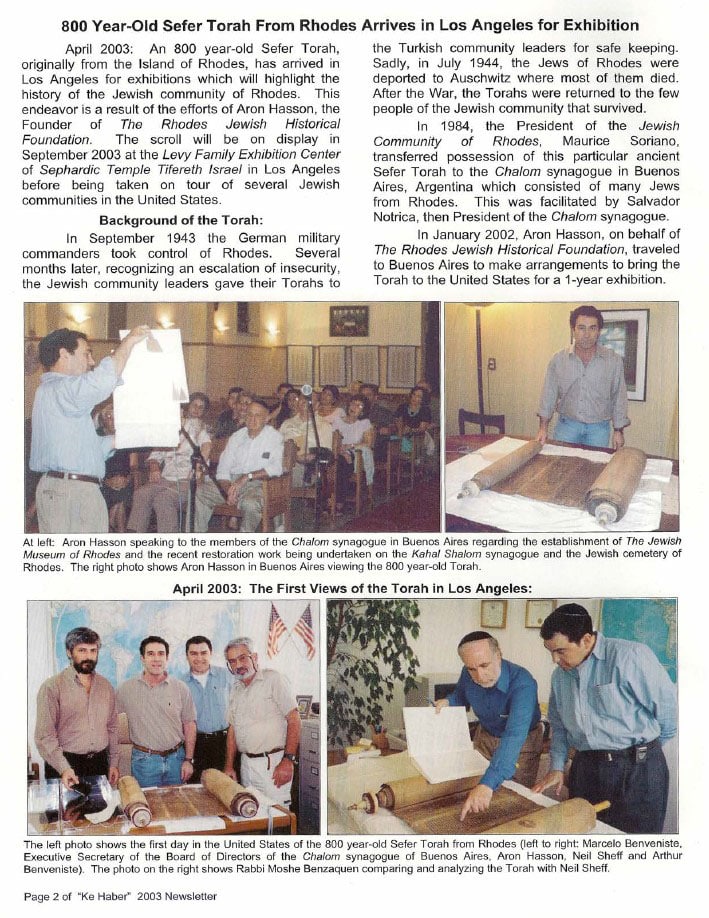
For download: 2003 Ke Haber Newsletter
Expert Analysis on the Torah Scroll from Rhodes:
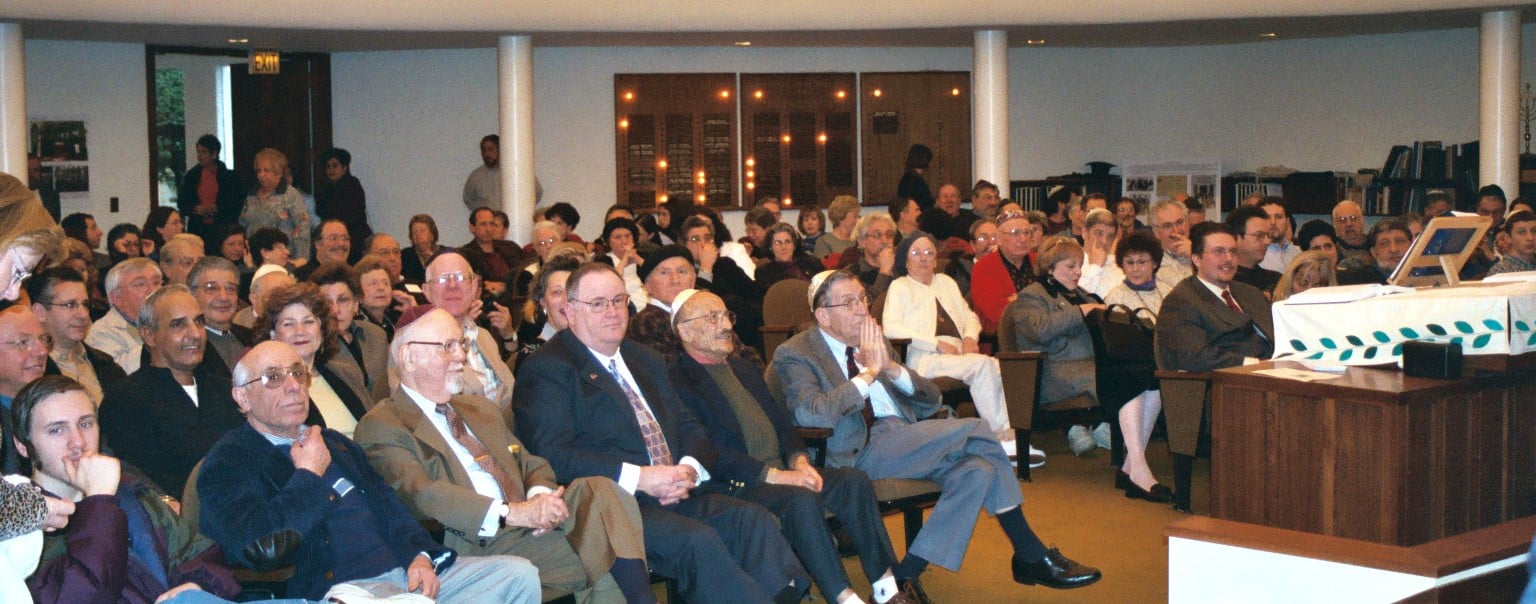
While present in Los Angeles, the Torah was analyzed by a scribe “sofer” who is an expert in evaluating the age and origin of ancient Hebrew writings. I interviewed Rabbi David Rue and selected highlights for people interested in understanding the distinguishing features of this ancient scroll. This summary of excerpts is about 10 minutes in length and is now presented for everyone to appreciate.
Examples of the Religious Writing Style:
We have learned that there are many different indications which give clues as to a Sefer Torah’s age and Sephardic origin. The following are some of the simpler to understand examples without getting too technical:
* All modern Torahs have 42 lines per column, while the Torah Scroll of Rhodes has 45 lines per column.
* The letter “lamed” is now written with a “cap” at the top, while the Torah Scroll of Rhodes has no “cap” on top.
* The letter “yud” in the Torah Scroll of Rhodes is written with an extra point or protrusion downward from the left center of the letter.
* When the letters “nun” and “yud” are next to each other they are separate letters in new Torahs, while the Torah Scroll of Rhodes has the “nun” extend below the “yud”.
* In order to justify the margins in modern Torahs only certain letters are elongated. In the Torah Scroll of Rhodes most letters are elongated.
* The “open” spacing between the words in the Torah show that it follows the Sephardic style of the Rambam called “petuhot”. For the last 400 years all Torahs have been written with the “closed” style (called “stumot”).
Examples of Differences Between the Ancient and Modern Judaic Religious Writing Characteristics:
|
|
|
|
| “Old” nun extends under the yud. “Old” yud with extra left lower stem.“ | “New” nun, yud. New yud without extra stem. | “Old” lamed without “cap”. | “New” lamed with “cap”. |
An Example of Elongated Letters in the Torah:

Script from the Exodus portion of the Torah. The words were elongated in order to show even margins.
Expert Analysis of the Torah Scroll from Rhodes:

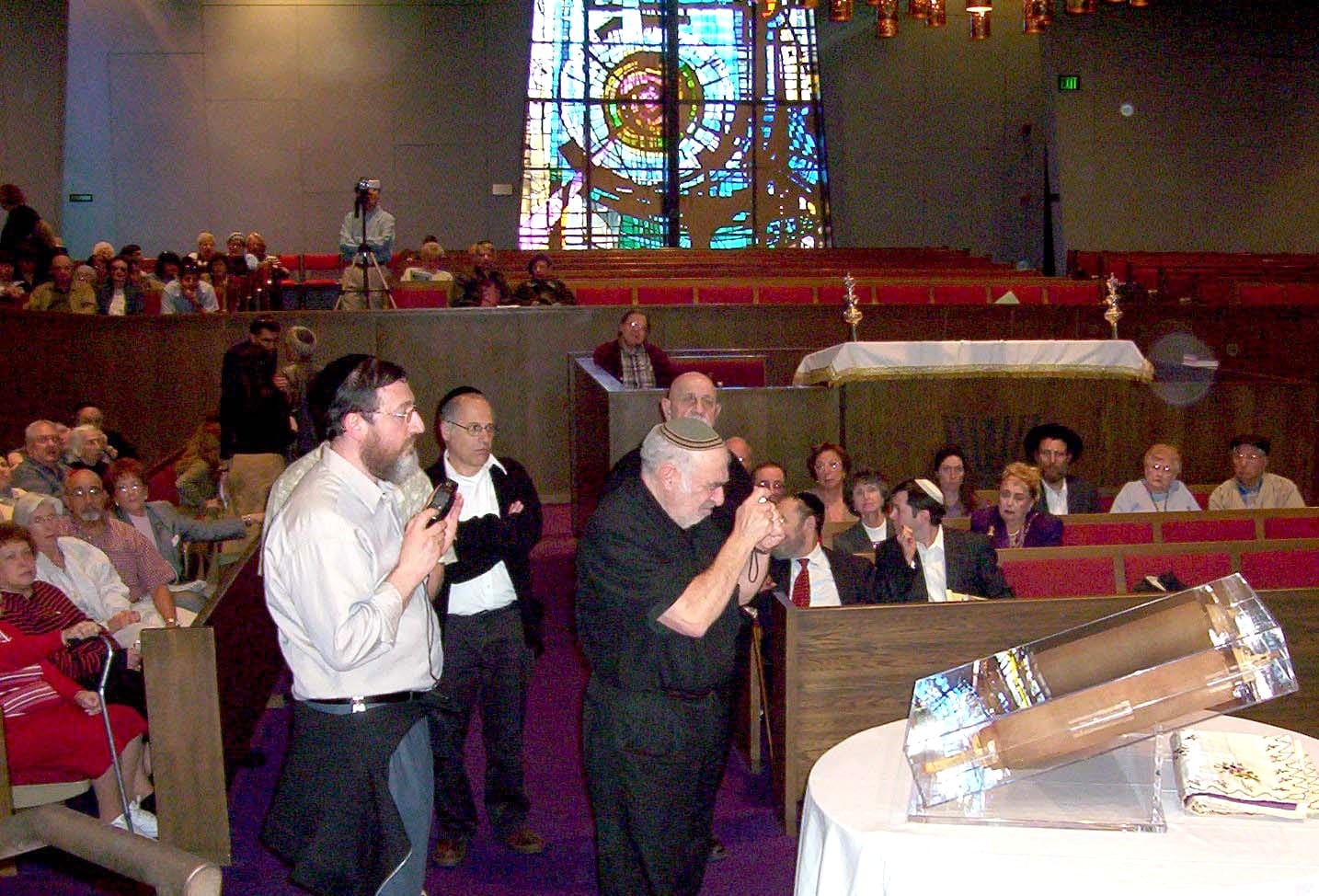
August 2003 in the library of the Sephardic Temple Tifereth Israel in Los Angeles, of Rabbi David Rue analyzing the Hebrew characters and spacing of the Sefer Torah with Aron Hasson observing.
Rabbi Rue is a “sofer” (scribe) with over twenty years of experience in Israel analyzing the age and origins of ancient Torahs in the museums of Jerusalem and Tel Aviv.
It was recognized that this Torah did not utilize a strict alignment (justified text of the columns), instead it follows a style that has not been used for over 600 years.
The following video is an interview of Rabbi David Rue analyzing the Torah: